Practical cryptocurrency guides
Polynomial DeFi is a staking-powered Ethereum L2 perps venue
Bottom line: Decentralized perpetuals exchange for trading crypto perps, where staking helps power its Ethereum L2 execution layer.
Polynomial defi is a decentralized perpetuals exchange powered by its own Ethereum rollup, built for fast crypto derivatives trading and DeFi-native capital flows. It combines perps markets, cross-margin accounts, multi-collateral deposits, and staking into one execution-focused system. The core idea is direct: traders open leveraged long or short positions on crypto assets, while the rollup and staking layer support the network that processes that activity.
Trading perps on a rollup built for execution
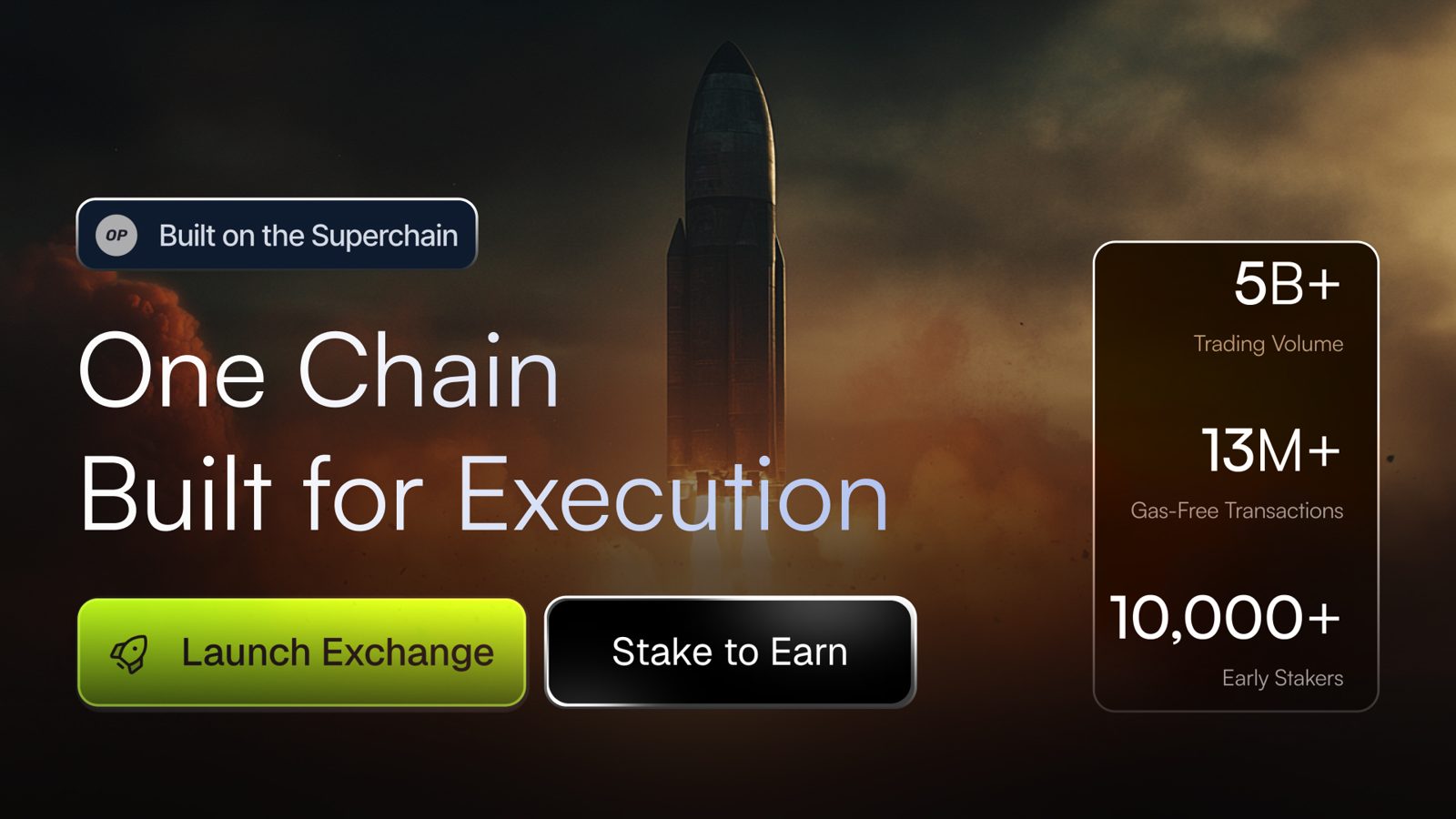
The defining feature is that the exchange is tied to its own Ethereum Layer 2 rather than being only an application deployed on a general-purpose chain. Polynomial describes the rollup as built for execution, which matters for perps because derivatives traders care about order timing, liquidation behavior, price impact, and margin updates. A slow or congested environment makes active trading harder to manage, especially when collateral and unrealized profit change quickly.
Polynomial defi also belongs to the broader Ethereum scaling stack and identifies as built on the Superchain. That places it in the ecosystem of rollups that settle back toward Ethereum while giving applications cheaper and faster blockspace. For a DeFi user, the practical experience is a trading venue that feels closer to a specialized exchange interface while retaining self-custodied wallet access and on-chain settlement logic.
Pool-based AMM first, orderbook precision as markets mature
In practice, Polynomial starts markets with a pool-based automated market maker. That design suits early or thinner markets because liquidity does not need to wait for a deep book of active makers before traders can enter and exit positions. The pool quotes prices, absorbs flow, and gives new markets a working base layer for execution.
As a market grows, the execution model is designed to move toward an orderbook. That shift is important because mature perpetuals markets benefit from tighter spreads, visible depth, and more precise order placement. The system is therefore built around a progression: AMM liquidity gives a market its first functional venue, then orderbook execution gives active traders a more detailed toolset as volume and participation deepen.
Cross-margin accounts and multi-collateral deposits
Margin is central to how Polynomial defi fits into DeFi. The exchange supports a cross-margin account structure, meaning a trader manages margin across positions through one account rather than treating each position as an isolated pocket. This increases capital efficiency because collateral supports the account as a whole, while it also requires the trader to understand how one losing position affects the rest of the portfolio.
Multi-collateral support broadens the margin base beyond a single asset. Polynomial references ETH, stablecoins, and other assets as usable margin, reducing the friction of converting every deposit into one required token. In a DeFi setting, that is useful because capital arrives from many sources: ETH held for exposure, stablecoins parked for trading, and assets bridged from other Ethereum-aligned environments.
- ETH works as native crypto collateral for directional traders.
- Stablecoins suit users who want margin value to remain easier to track.
- Cross-margin links risk across positions in one account.
- Perps positions create funding, liquidation, and collateral management obligations.
- Bridging moves assets onto the rollup before they are used on the exchange.
Oracle-based liquidations and the risk of fast leverage
Notably, Polynomial uses oracle-based liquidation logic, which is intended to reduce the effect of short-lived price wicks and manipulation on liquidation outcomes. In leveraged perps, liquidation rules decide when collateral no longer supports a position. Price integrity therefore sits close to the center of the user experience, because a small move at high leverage changes account health rapidly.
The DeFi risk is not abstract. A trader who uses high leverage, correlated collateral, and multiple open positions creates a fragile margin account. Cross-margin improves efficiency, but it also links the account together. A loss in one market consumes shared collateral and changes the available buffer for the others. Polynomial defi gives traders a structure for managing this on-chain, while liquidation risk remains part of every leveraged derivatives venue.
Where staking enters the exchange design
Staking is presented as part of the system rather than a separate rewards page bolted onto trading. The official messaging emphasizes a rollup where staking powers the system, tying user participation to the execution environment that supports the exchange. This is a different angle from a simple perps interface, because the product combines market activity with a network-level participation layer.
For users evaluating Polynomial defi as a DeFi venue, staking matters because it connects capital, incentives, and network growth. Traders bring volume, stakers support the broader system, and the exchange is structured to reward the users who help drive it. The exact return profile changes with protocol design and market conditions, so the important point is the role staking plays: it is part of the rollup economy surrounding the perps exchange.

A first trading flow from bridge to position
A typical path begins by connecting a wallet, bridging assets to the Polynomial rollup, and choosing the market to trade. From there, the trader deposits eligible collateral, reviews available margin, selects long or short exposure, and enters the position size. The interface is built around perps activity, so the account view, open positions, margin status, and liquidation levels matter more than simple spot-token balances.
Before increasing size, a user should understand three numbers: position notional, available margin, and liquidation distance. Funding payments also deserve attention because perpetual futures do not expire like dated futures. They use funding mechanics to keep contract prices anchored near the underlying market. Polynomial defi packages these moving parts into a DeFi trading workflow, but the economic logic remains the same as other perpetuals markets.
DeFi use cases beyond simple long and short trades
The obvious use is directional speculation: long ETH when expecting upside, short an asset when expecting weakness, or adjust exposure without selling spot holdings. More advanced users treat perps as hedging instruments. Someone holding ETH on-chain might short ETH perps to reduce near-term price exposure while keeping the underlying asset in their wallet ecosystem.
Another use case is capital rotation. Because Polynomial supports cross-margin and multi-collateral, a trader can manage several positions from one margin account and decide where collateral works hardest. Builders also pay attention to composability. A rollup optimized for trading gives applications a specialized execution layer for derivatives, risk tools, account dashboards, and market data experiences that build around the same trading system.

Polynomial beside GMX, dYdX, and Hyperliquid
Perps traders already compare venues such as GMX, dYdX, and Hyperliquid, so Polynomial defi is best understood through its specific architecture. GMX is known for pool-based liquidity across supported chains. dYdX built a derivatives-focused exchange stack with orderbook trading. Hyperliquid emphasizes a high-performance perps experience with its own chain design. Polynomial's differentiator is the combination of a decentralized perps exchange, its own Ethereum rollup, AMM-to-orderbook market evolution, cross-margin, multi-collateral support, and staking-powered network participation.
That mix makes it relevant for users who want Ethereum-aligned execution without treating perps, bridging, margin, and staking as separate products. It is not the only venue for crypto derivatives, and it does not remove the hard parts of leverage. Its appeal comes from a more integrated DeFi path: bring assets onto the rollup, manage margin, trade perpetuals, and participate in the system that processes the activity.
What to watch before sizing up
The strongest reason to study Polynomial defi is its attempt to make the trading layer and the rollup layer reinforce each other. That is also the area to watch over time. Liquidity depth, market coverage, oracle performance, bridge reliability, funding behavior, and the maturity of orderbook execution all affect the quality of the venue.
A trader does not need to master every rollup detail before opening a small position, but the important mechanics deserve respect. Perpetuals amplify both correct and incorrect decisions. Collateral choices affect liquidation risk. Staking changes exposure from pure trading into broader protocol participation. Used with that context, Polynomial becomes more than another exchange screen: it is a DeFi perps system built around Ethereum L2 execution and capital alignment.
Before you start with Polynomial defi
Which traders benefit most from cross-margin on Polynomial?
Cross-margin suits traders who manage more than one position and want collateral treated at the account level. It helps when a portfolio has offsetting exposures or when unused margin in one area should support another open trade. The tradeoff is shared risk: a loss in one position reduces the collateral buffer for the full account, so position sizing becomes more important.
Is staking on Polynomial connected to trading rewards?
Staking is part of the system design around the Polynomial rollup and its exchange activity. The official positioning describes a rollup where staking powers the system and where the structure rewards users who help drive it. That makes staking relevant to the broader DeFi model, not just a side feature. Users should separate trading risk, staking exposure, and bridge activity when deciding how much capital to commit.
Why would a DeFi trader choose Polynomial over a spot DEX?
A spot DEX is built for swapping assets, while Polynomial is built for perpetual futures. Perps let traders take long or short exposure, use margin, and manage positions without buying or selling the underlying asset directly. That makes it useful for hedging, directional trading, and capital-efficient exposure. The added complexity is liquidation risk, funding payments, and active margin management.
Fees on Polynomial defi: what costs should traders expect?
Traders should expect costs from execution and from the economics of perpetual futures. The visible trade price, spread, slippage, and funding payments all affect the real cost of a position. Because the exchange runs on its own Ethereum rollup, transaction costs are designed for L2 activity rather than Ethereum mainnet congestion. The important habit is to review margin, liquidation level, and funding before increasing position size.