Practical cryptocurrency guides
Polynomial is an Ethereum rollup built for gas-free perpetuals trading
Bottom line: Decentralized perpetuals exchange for crypto perps, using its own Ethereum rollup to support gas-free trading and market execution.
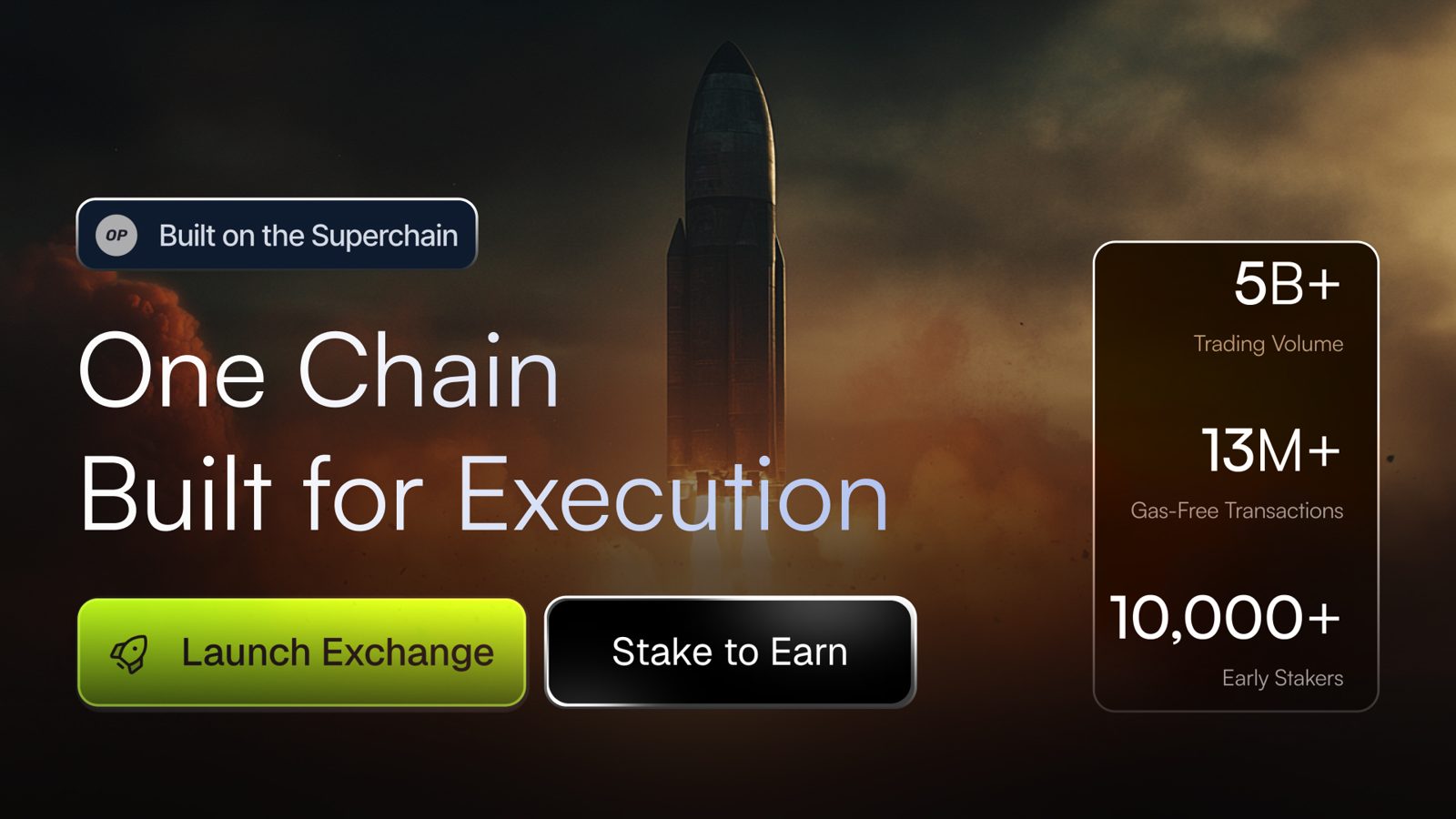
Polynomial is a decentralized perpetuals exchange powered by its own Ethereum Layer 2, built so crypto traders open and manage leveraged positions without paying gas on each trade. It runs on the Superchain, uses exchange infrastructure designed around fast execution, and combines pool-based liquidity with an order book path as markets mature. The core idea is direct: perps trading, cross-margin, multi-collateral accounts, and staking all live inside one execution-focused rollup.
Execution starts on its own Ethereum Layer 2
The most distinctive part of the design is the chain itself. Rather than treating trading as an application that competes for blockspace on a general-purpose network, the exchange runs on an Ethereum rollup shaped around execution. That matters because perpetual contracts are interaction-heavy: traders adjust collateral, add size, reduce exposure, react to liquidations, and move between markets. Lower transaction friction gives the interface room to feel closer to a centralized exchange while keeping settlement inside DeFi rails.
Its Superchain connection also places the rollup within the broader Optimism ecosystem, where Ethereum-aligned Layer 2 networks share infrastructure assumptions and developer tooling. For users, the visible benefit is simpler: trades settle on a chain built for the venue, and routine account actions are not interrupted by separate gas payments.
Pool pricing before the order book takes over
Polynomial begins each market with a pool-based automated market maker. That choice solves a real launch problem for new perps markets: thin order books create wide spreads, fragile fills, and poor depth. A pool-based AMM supplies immediate pricing so early markets support large trades with controlled price impact instead of waiting for professional market makers to populate both sides.
As volume and liquidity build, execution upgrades toward an order book model. The order book supports tighter spreads, sharper price discovery, and the type of precision active traders expect when they scale position sizes. This two-mode engine gives small markets a starting point and gives larger markets a path toward institutional-grade execution without splitting the user experience across separate venues.
Cross-margin changes how positions share collateral
The cross-margin account is one of the practical features traders notice quickly. A single margin balance supports every open position, so unused collateral in one market supports risk in another. Someone trading ETH perps and a second crypto market does not need isolated pockets of collateral for each position unless the interface offers that mode separately.
This structure improves capital efficiency, but it also concentrates account risk. A losing position draws against the same collateral that protects the rest of the account. The trade-off is worth understanding before increasing leverage: cross-margin makes portfolio management easier, while liquidation exposure becomes a portfolio-level calculation instead of a single-market calculation.
Multi-collateral margin with ETH and stablecoins
It supports margin from ETH, stablecoins, and other accepted assets, which removes a common step in DeFi derivatives trading. A trader does not need to wrap every asset into a single exchange-specific collateral format before opening a position. That reduces transaction clutter and makes the account closer to a unified trading balance.
Multi-collateral design also changes treasury behavior for active users. Stablecoin margin keeps account value easier to read, while ETH collateral gives traders exposure to the asset they already hold. Polynomial uses this flexibility to make the exchange feel less like a narrow derivatives silo and more like an onchain margin account.
Oracle-based liquidations reduce wick exposure
Liquidations in perps markets become painful when a short-lived price wick triggers forced closing even though broader market pricing never fully confirmed the move. The exchange uses oracle-based liquidation logic to protect accounts from manipulation and isolated exchange spikes. That does not remove liquidation risk; leverage still magnifies losses. It does make the trigger less dependent on a single volatile print.
This design is especially important for onchain perps, where liquidity varies across venues and attackers look for weak pricing paths. Oracle logic gives the liquidation system an external price reference, aligning risk checks with market-wide data rather than the most fragile trade in one book.

Gas-free trading changes the rhythm of active management
Gas-free transactions are more than a cost feature. They change how a trader manages a position over time. Adding collateral, reducing size, adjusting exposure, and moving between markets become ordinary workflow steps instead of decisions weighed against network fees . Polynomial emphasizes this point because perps trading rewards quick account management, especially around volatile moves.
That structure also helps smaller accounts. When every action carries visible transaction cost, a trader with limited capital is pushed toward fewer, larger adjustments. Removing per-trade gas from the trading flow makes position management less clumsy and makes the interface more usable for strategies that require frequent changes.
Staking is tied to the rollup's own economy
The staking layer is presented as part of the system rather than a side campaign. The official site describes the rollup as one where staking powers the system, which means the exchange links user participation, capital, and network growth inside the same environment. Stakers support the ecosystem that the perps venue depends on and share in the success generated by activity on the chain.
This is the broader DeFi pattern behind the product: traders bring volume, liquidity deepens markets, builders compose around the chain, and stakers align capital with the venue's growth. Polynomial is built so these roles sit on the same rollup instead of being scattered across unrelated contracts and chains.

Opening a first trade follows a rollup workflow
A new user starts with the exchange interface, connects a wallet, bridges funds to the rollup, chooses acceptable collateral, and opens a perps position from the available markets. The core account actions are familiar to anyone who has used DeFi, but the trading flow is closer to a derivatives exchange than a spot swap screen.
- Connect an Ethereum wallet supported by the app.
- Bridge ETH, stablecoins, or supported collateral to the rollup.
- Deposit collateral into the margin account.
- Select a perpetual market and choose direction, size, and leverage.
- Track margin health before adding exposure or withdrawing collateral.
Once funded, the same account manages multiple positions under cross-margin. Polynomial keeps the focus on execution, so the important habit is monitoring collateral health before market volatility forces a decision.
Where it fits among DeFi perps venues
The closest comparison set includes onchain derivatives venues such as dYdX, GMX, and Hyperliquid. dYdX is known for order book trading on dedicated infrastructure, GMX popularized oracle-priced perps with liquidity pools, and Hyperliquid built a high-speed onchain exchange around its own execution environment. Polynomial combines pieces of that landscape: a dedicated rollup, AMM support for newer markets, an order book path for mature markets, and gas-free trading inside one account model.
That mix suits traders who want DeFi custody and fast perps execution without treating every account adjustment as a separate gas event. It also gives builders a more specific base layer for derivatives products, because the rollup is optimized around trading rather than general app traffic.
Polynomial: questions and answers
- What fees do traders pay when using Polynomial?
- Trading costs come from the exchange's perps fee model and the spread or price impact of the selected market, while routine trading actions are designed to be gas-free inside the rollup experience. The important distinction is that gas-free trading removes a separate network fee from normal position management; it does not mean every trade has zero economic cost. Market depth, leverage, and execution mode still affect the final entry and exit price.
- Do I need ETH to trade on the Polynomial rollup?
- A wallet and bridged funds are required, and ETH remains relevant because the rollup is part of the Ethereum Layer 2 ecosystem. The margin account supports ETH, stablecoins, and other accepted collateral, so a trader does not need to convert everything into one narrow collateral asset before opening a position. Exact funding choices depend on the assets supported in the live app.
- Can beginners use Polynomial without understanding perpetual futures?
- The interface is built for trading, but perpetual futures require a real understanding of leverage, liquidation price, funding, collateral value, and position sizing. A beginner should learn how perps differ from spot markets before opening a live position. The most important concept is that leverage amplifies both gains and losses, and cross-margin means one weak position affects the health of the broader account.
- Which wallets work with Polynomial?
- The exchange is designed for Ethereum-style wallet connections, so common EVM wallets are the expected fit. A user connects a wallet, bridges assets to the Layer 2, and manages positions through the trading interface. Compatibility depends on the current app integration, wallet network support, and whether the wallet handles the rollup configuration cleanly.
- What happens if my cross-margin account drops below maintenance margin?
- When account collateral falls below the required maintenance level, the liquidation system closes or reduces risk according to the exchange rules. Because cross-margin shares collateral across positions, losses in one market reduce the buffer for every other open trade. Oracle-based liquidation logic helps avoid isolated wick manipulation, but it does not protect an undercollateralized account from normal market movement.
- Is Polynomial closer to GMX or dYdX?
- It shares traits with both, but it is not a direct clone of either model. Like GMX-style systems, it uses pool-based liquidity for markets that need immediate depth. Like dYdX-style venues, it moves toward order book execution when markets mature and require tighter spreads. Its separate Ethereum rollup and gas-free trading flow are the defining pieces that set the experience apart.